Summary: Jacqueline W. Nuzzo is an artist and researcher exploring the aesthetic threshold between order and disorder, primarily through printmaking, drawing, and textiles. With an MFA from the School of the Art Institute of Chicago, she now works as an Associate Studio Creative Director at Maya Romanoff. In this conversation with Dezi founder Nitya Mehrotra, she shares direct anecdotes and grounded advice about mapping a sustainable life in the arts.
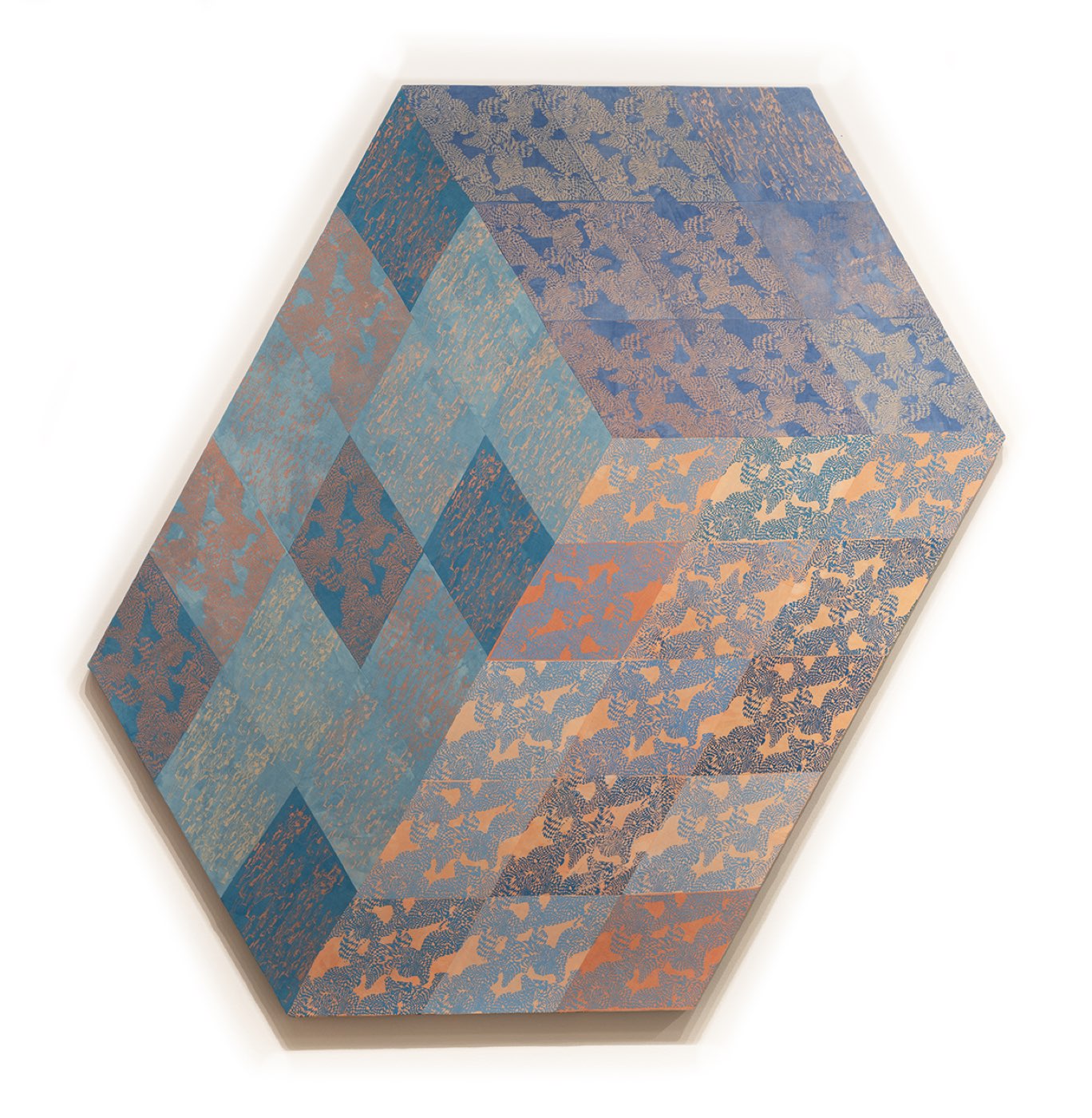
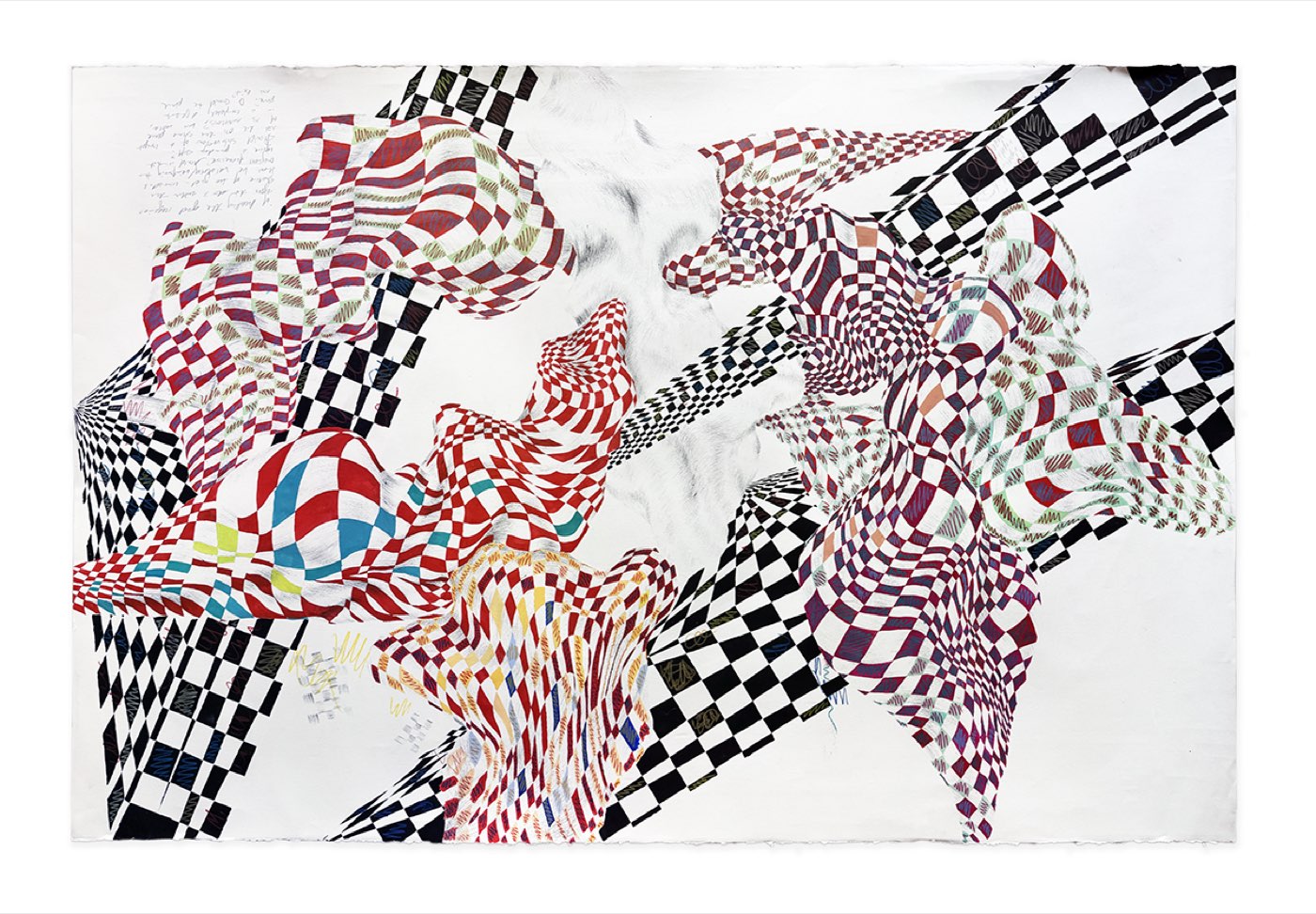
Jacqueline is an artist and researcher exploring the aesthetic threshold between order and disorder, primarily through printmaking, drawing, and textiles. With an MFA from the School of the Art Institute of Chicago, she aims to identify the "edge of chaos," a conceptual space where something feels wild and unpredictable but still has just enough structure to understand it. She uses grids in her work to question how we see things, an idea she wrote about in her published thesis, Patterns of Disruption: Repetition and Originality.
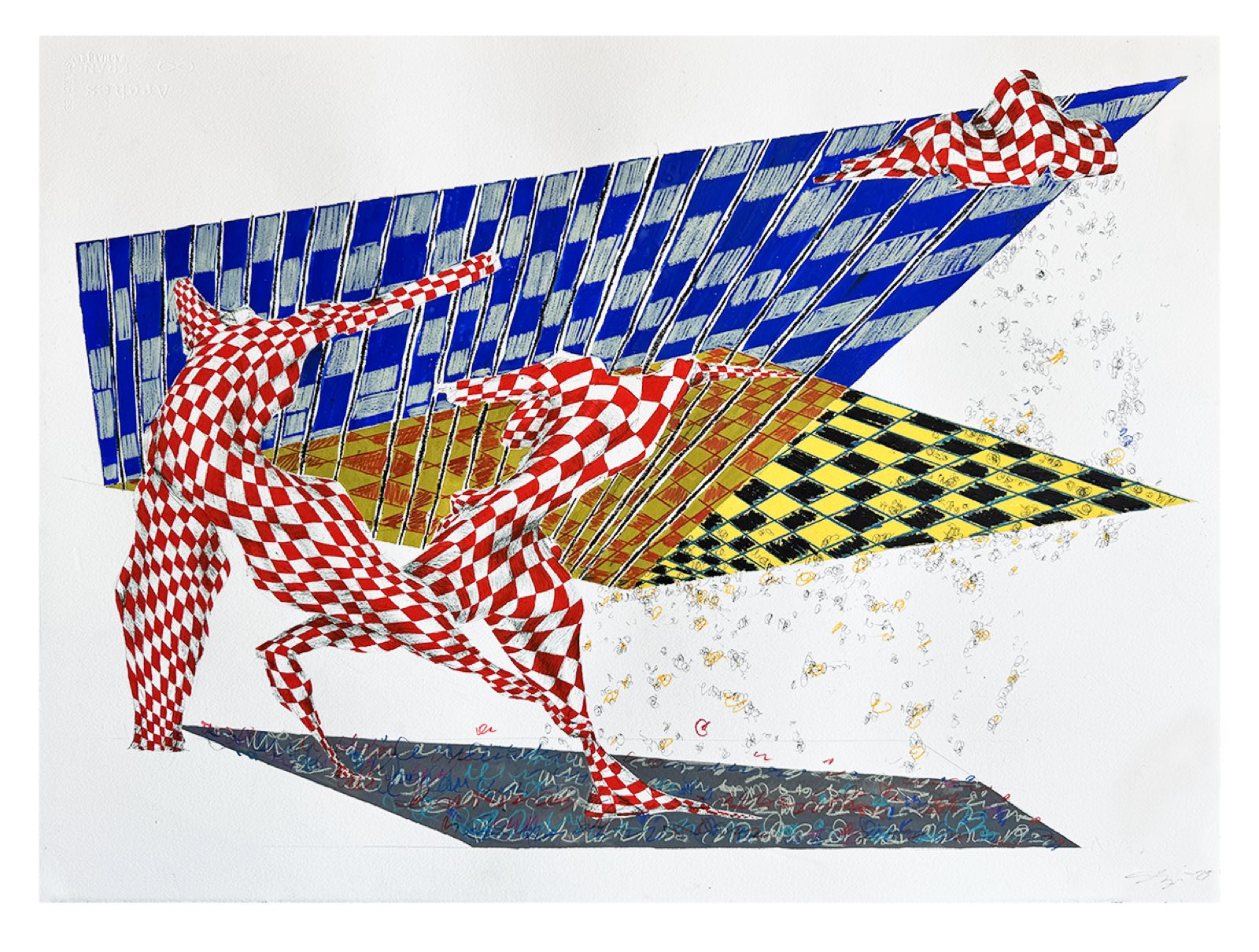
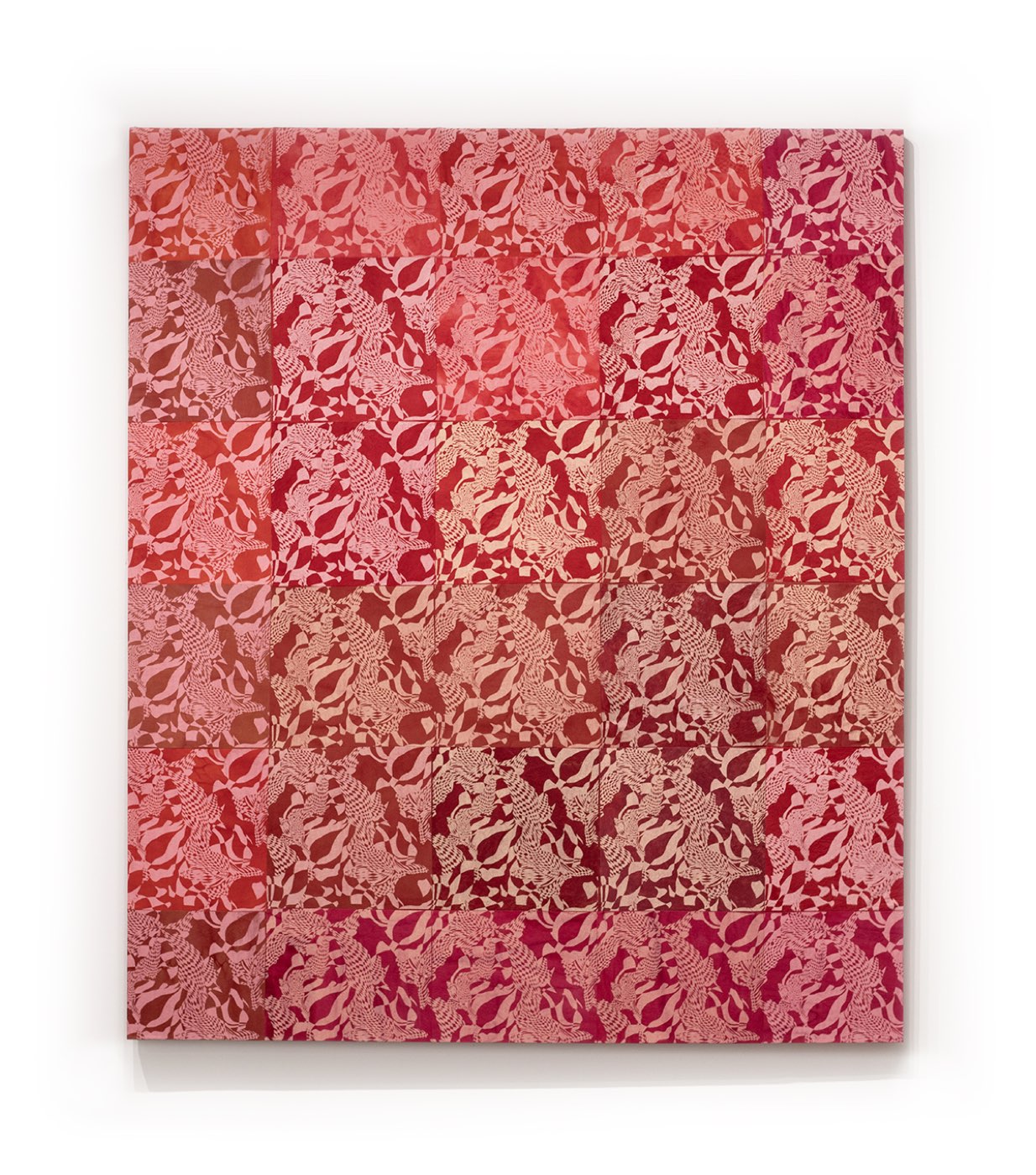
Her interest in combining textiles, printmaking, drawing, and warped grids is perfectly captured in two of her favorite pieces: "Futbol Martini," a complex wash drawing where a blue plane overlaps with a checkered yellow grid, and "Red," a hand-dyed and screen-printed fabric work from her MFA exhibition. She currently works as an Associate Studio Creative Director at Maya Romanoff.
The Science vs. Art Conflict
Growing up in Coronado, California, and later moving to Vermont, Jacqueline grew up in a family where she was pressured to pick science because of its predictability, even when she liked art equally. Nitya asks how she navigated societal pressure that renders the arts an unsustainable career choice. She actually tried the science route first, taking a job right out of college as a research assistant at a university entomology lab. It sounded like a fancy title, but after spending her days out in a field "picking bugs off of corn and milkweed plants," she realized she did not want to do that for the rest of her life. Instead, she sought a creative career to financially support her independent practice.
When asked how her interest grew in visual arts specifically, she credits her thesis project, which deals with the notion of the grid. It is also seen in traditional textile work, common in weaving, tiling, and ceramics. The exploration of the grid marked the beginning of her artistic vision and visual style.
Building Confidence before Stability
Nitya points out that many emerging artists feel the immediate need to move to highly competitive hubs like New York or Los Angeles, and she asks Jacqueline if starting in a smaller city helped build sustainability. Jacqueline agrees, noting that the Minneapolis art scene was incredibly "accessible, approachable, inclusive, and kind." While working weekends as a gallery guard at the Walker Art Center to stay connected to the fine arts, she landed a role at a small animation studio and eventually worked her way up to lead producer. She tells Nitya:
I think starting small is really smart for emerging artists. Not because smaller cities are "easier" but because it's just a different level of competition. I think the biggest thing I had to do was remind myself that it's about the work and about what's making me feel fulfilled.
It allowed her to exhibit in up-and-coming galleries, face rejection, and learn about the industry without taking a massive hit to her self-confidence before she came to a much more competitive space in Chicago.
Financial Realities and Necessary Trade-offs
Shifting the conversation to the practicalities of income, Jacqueline notes that an artist's life is rarely built on just one thing. Before pursuing her master's degree, Jacqueline worked as a creative manager at an art consulting company in Seattle. She spent two years budgeting strictly so she could save enough money to put herself through grad school without immense debt. Today, her full-time role as a creative director provides stability. She candidly admits that this choice means she cannot take three-month art residencies because she does not have unlimited time. However, this is a trade-off she is willing to make. She adds:
My recommendation for artists is to talk to as many people as you can and hear their stories, the ones making a lot of money, the ones who aren't, and even professors balancing multiple jobs before tenure. You have to hear a lot of different stories so you go into your own choices informed.
When Nitya asks about unexpected streams of income, Jacqueline shares the story of her friend Evan. He found massive success by getting representation specifically for illustration, proving that you just have to keep taking on commissions until you find a path that works.
Keys to Getting a Creative Job
Now sitting on the hiring side of the table, Jacqueline reveals that a perfect portfolio is not everything. She observes that while you can teach someone software, "you can't really teach character, personality, or charisma." She strongly advises applicants to show up with humility, be confident in their abilities, and prove they can collaborate with a team. Furthermore, she shares a crucial survival skill for corporate creative environments: you must learn to separate your personal practice from your day job. In a job, you receive regular feedback, and you need to take it constructively rather than personally. Quoting a former professor, she adds, "leave your own baggage at the door and go in trying to help whoever's asking for your help."
She further encourages artists to learn something in a completely different field to stay well-rounded. She even tells Nitya that her biology degree heavily contributed to her business acumen, as it taught her the logical thinking, lab safety, and procedure-following that make her a stronger professional today.
The Best Advice for Young Creatives
In closing, Nitya asks about mentorship and the best advice Jacqueline has ever received. Jacqueline emphasizes that you have to actively seek professors and mentors because they will not just come to you. She insists that artists must be willing to be vulnerable and accept that they will be humbled from time to time. When Nitya asks what she would tell her younger self, Jacqueline keeps it beautifully simple, advising artists to "throw things at the wall and see what sticks." However, she follows this up with one of the most real and vital pieces of financial advice for any emerging artist: "get a 401(k) or a SIMPLE IRA as soon as you can." Since many artists do not have a retirement plan, it helps them in future planning.
She wants people to feel inspired, but she also wants them to be realistic and ready for the fact that "you're not going to get everything you want, and it's not easy. If you keep trying, you'll get there."
Jacqueline Nuzzo is clearly very successful and fulfilled in her creative director role at a wallpaper design company, and it's an ode to the thoughtful steps she took. She keeps exploring new ideas in her art, but she stays completely practical about what it takes.
Note from Nitya: I have had the pleasure of witnessing Jacqueline's art in person at galleries, and she is one of the most technically profound artists I know. But the fact that she emphasizes practicality regardless of her obvious talent is exactly what I hope young artists learn before it's too late.