That's the deal, apparently. If you chose this, you signed up for instability, for being broke, for "that's just how it is."
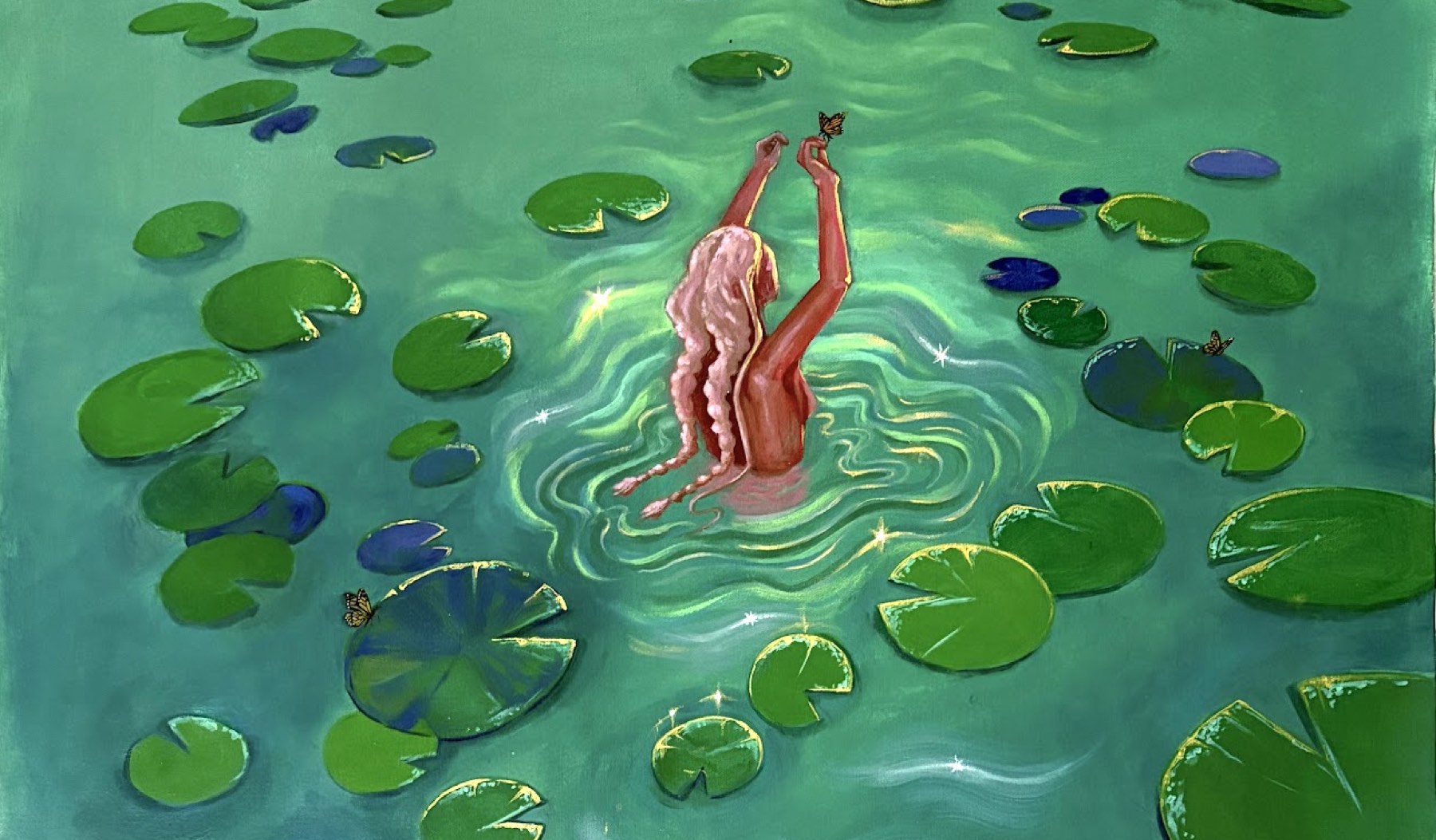
I recently got paid to show my work at Woman Made Gallery in Chicago, and that show led directly to selling the painting. Not a fluke, not a lucky break I can't explain. A show led to a sale because a specific chain of decisions put my work in front of the right room.
We don't talk about money in art, mostly because nobody else is talking about it either. The creative industry is worth over a trillion dollars globally. Artists barely get to touch that money. Outside the handful of corners that got commercialized (film is the obvious one), there's no defined way to "rise through the ranks" in art. So the industry runs on a quiet exploitation of passion: the assumption that wanting to make the work is payment enough, and asking for more makes you less serious about it.
I don't believe that deal is real.
How Working Artists Actually Build Income That Pays Rent
I've watched artists across mediums that have nothing in common with each other build practices that actually pay their rent, and the pattern isn't talent. It's that they figured out, usually the hard way, how the money side of their specific corner of art actually works.
Jordyn Alison, a working illustrator and designer, publishes a public breakdown of her own income every year, naming exactly which streams paid her (client work, product sales, licensing) and how much each one moved. Most artists never see a real number like that from someone actually doing the work, so they assume it doesn't exist.
Alex Goddard, a painter, has written openly about running six separate income streams at once: originals, prints, commissions, teaching, licensing, and more, rather than waiting on any single one to be enough. That's not a lucky diversification. It's a deliberate structure, built the same way you'd build a business, because it is one.
And representation itself follows a mapped process, not a mystery. Galleries that take on artists are generally looking for a consistent, resolved body of work, a clear-headed sense of your own market, and professionalism in exactly the unglamorous ways an application or a studio visit reveals it. None of that is secret. It's just rarely written down in one place.
We call this luck. We used to call STEM success luck too, before we admitted the path could be taught, mapped, and repeated. There's no reason art should be the one field where "figure it out yourself, quietly, over a decade" is treated as the only method.
What we're building
That's the whole reason I'm building Dezi. Not to make anyone luckier. To make the knowledge that decides who "makes it" available to everyone who's already doing the work: how pricing actually happens, how galleries actually choose, how grant panels actually read an application, how the income streams above actually get built.
Our first initiative is the Dezi Art Prize: $1,000 unrestricted grants to two visual artists, plus a feature in Dezine for the top 30 applicants, a free career audit for the top 20 of those, and a career-guidance interview offered to every single applicant regardless of outcome. Applications are open now through September 10, 2026.
If you're already doing the work, this is a place to put it in front of people who are paying attention.
Sources referenced: Jordyn Alison Designs, Alex Goddard Art, AGI Fine Art, Dan Schultz Fine Art, and DEZI's internal Knowledge Framework (Topic 3: How Money Works; Topic 4: How Decision-Makers Choose).